

Kelly McCloskey featured in Mamamia
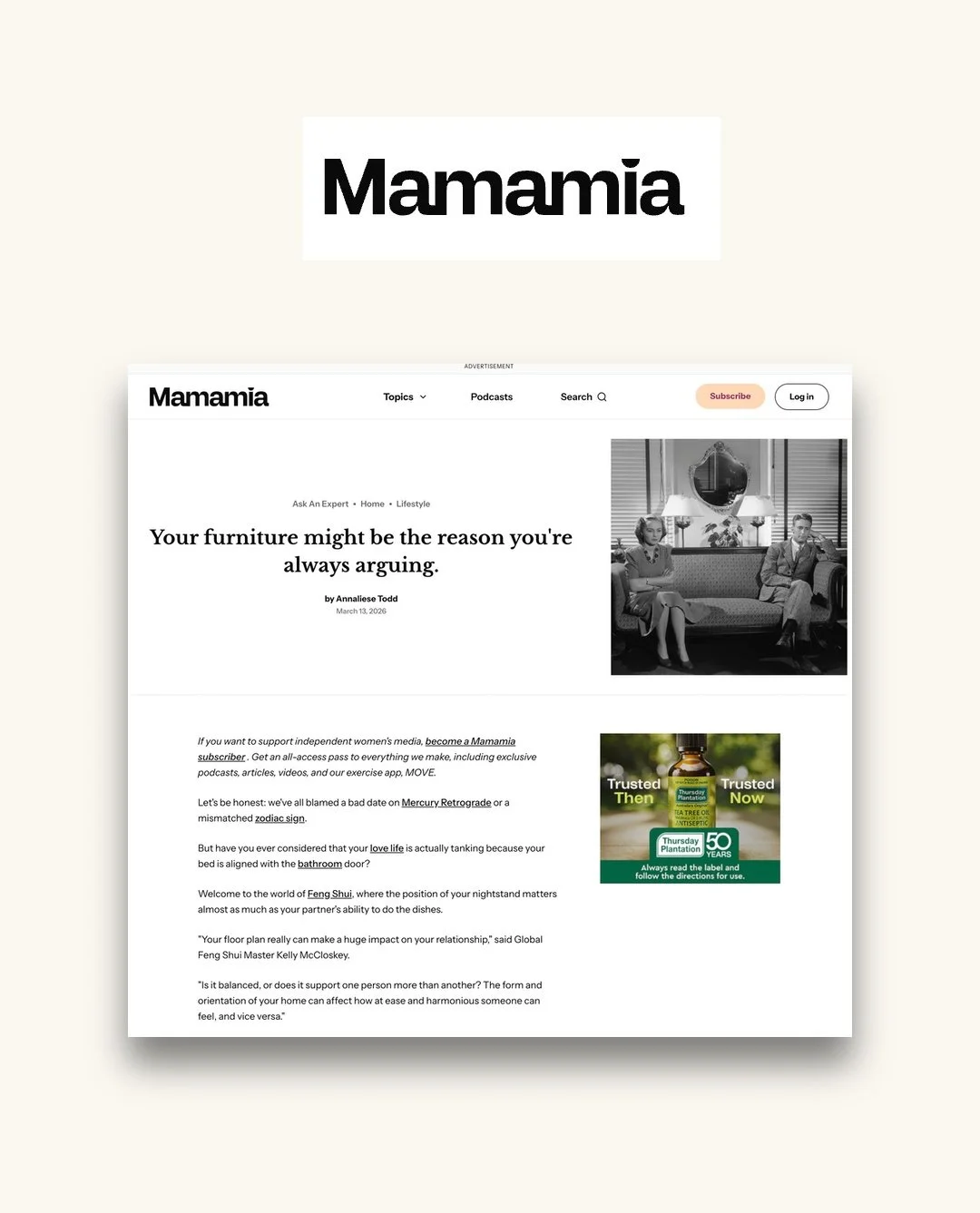
Kelly McCloskey was interviewed by Mamamia to share how the layout and energy of a home can influence communication, harmony and connection in a relationship.
I was interviewed by Mamamia to talk about how the layout and energy of a home can directly affect the quality of a relationship. The piece explored the idea that our homes are not neutral backdrops however, they can either support harmony, ease and connection, or quietly amplify tension, miscommunication and emotional strain.
In the article, I explained that a floor plan can have a huge impact on a relationship because the form and orientation of a home can support one person more than another, or create a sense of imbalance between the people living there. I wanted to show that when a home is not energetically balanced, it can affect how at ease, connected and harmonious people feel with each other.
A big part of my advice focused on practical examples that people could recognise in their own homes. I spoke about the kitchen as one of the biggest offenders when it comes to conflict, because it already carries strong fire energy, and adding more red or heat can intensify fiery exchanges within the family. My advice was to soften that energy and avoid unnecessarily activating more fire in the space.
I also spoke about living room layout and why support matters, even in something as simple as the placement of a sofa. I explained that when a couch is floating in the middle of the room with nothing behind it, it can leave people feeling subtly unsupported and on edge. My advice was to anchor the space with something behind the sofa, such as a console table, lamp or plant, so the room feels safer, calmer and more settled.
Another point I shared was the importance of what we surround ourselves with visually. In the article, I explained that the imagery in a home matters because what we look at repeatedly can influence our emotional state and what we energetically reinforce. I encouraged people to choose artwork that feels calm, grounded and peaceful, rather than aggressive or turbulent, particularly if they want their home to support mental wellbeing and relationship harmony.
The interview also gave me the chance to talk about communication in the home. I explained that when the front and back doors are not aligned, or when a house is so spread out that family members are effectively living in separate wings, it can contribute to disconnection and miscommunication. My point was that a home should help people feel linked to one another, not physically and energetically pulled apart.
One of the clearest messages I gave in the piece was that clutter has to go. I said very directly that a home cannot support you if you are constantly stepping over mess, and that clearing clutter is one of the fastest ways to improve the feeling of a space — and often, the quality of life within it. That advice is simple, but it is often the most powerful place to begin.
Finally, I spoke about the deeper balance of the home, including the symbolic relationship between the left and right sides of a floor plan, and the importance of checking the centre point, or “heart of the home,” where all the energy comes together. My advice was that if this central area has become closed off, cluttered or neglected, it should be opened up and made more inviting, because this is where the home and by extension, the relationship needs room to breathe.